مصمم لتحمل الحرارة: ما الذي يضيفه 4,4'-DDS إلى أنظمة الإيبوكسي؟
Aug 12, 2026
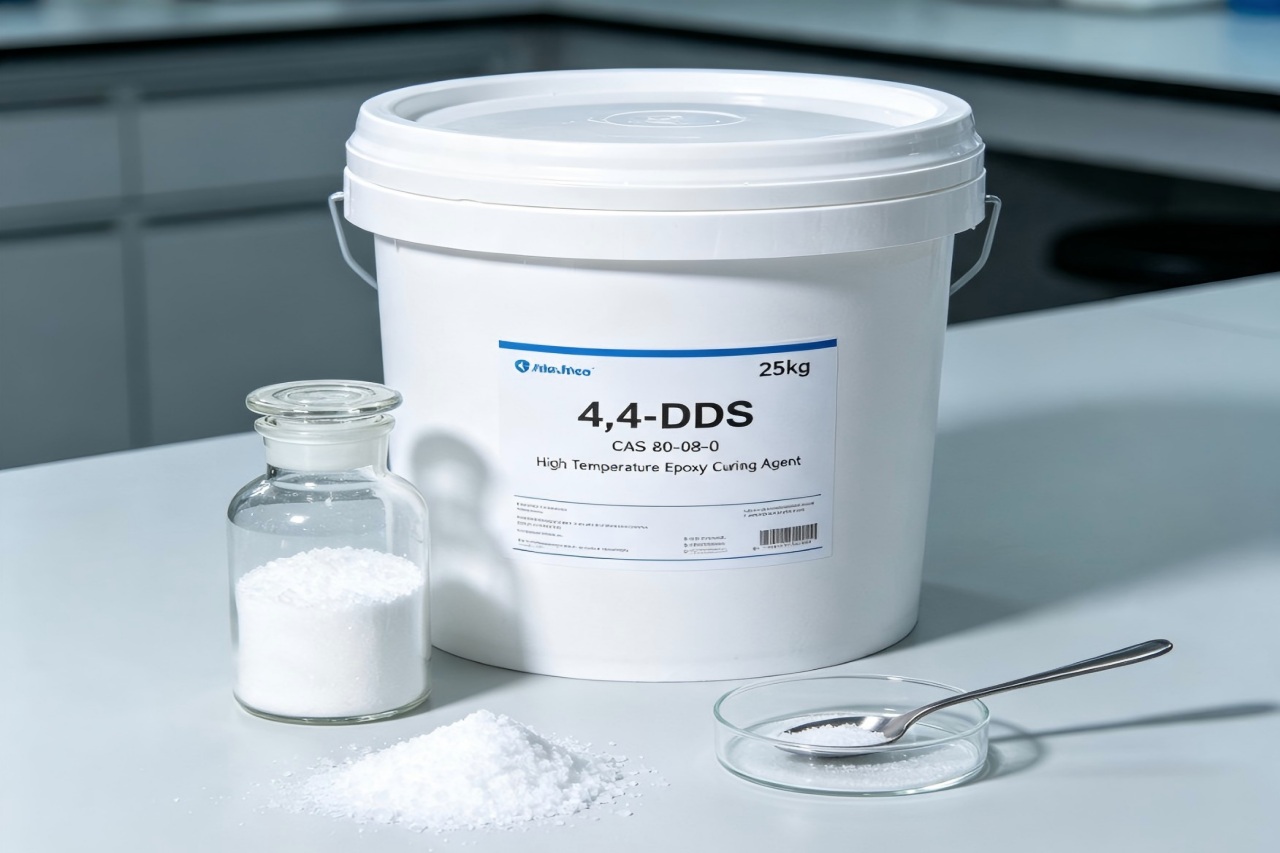
لا يقتصر دور عامل المعالجة على تصلب الراتنج فحسب، بل يساعد أيضاً في تحديد ما إذا كانت الشبكة النهائية ستستمر في العمل عندما يصبح عامل الحرارة هو الاختبار الحقيقي. عندما يتطلب الأمر من مكون الإيبوكسي الحفاظ على شكله وعزله وسلامته الميكانيكية عند درجات حرارة مرتفعة، قد لا يكون تغيير الراتنج وحده كافيًا. يصبح عامل التصلب جزءًا من البنية النهائية. وهنا تبرز أهمية 4,4'-DDS. يُعدّ 4,4'-ثنائي أمينو ثنائي فينيل سلفون ثنائي أمين عطري بلوري يُستخدم في أنظمة الإيبوكسي عالية الحرارة. يُمكن لبنيته الصلبة المُرتبطة بجسور السلفون أن تدعم شبكة ذات درجة حرارة انتقال زجاجي عالية (Tg) ومستقرة حراريًا بعد المعالجة المناسبة. وبنفس القدر من الأهمية، فإن تفاعله البطيء نسبيًا عند درجات الحرارة المنخفضة يُتيح وقتًا كافيًا للخلط أو التشريب أو الصب قبل أن تُسرّع الحرارة عملية المعالجة. لا يُعدّ DDS اختصارًا للوصول إلى درجة حرارة انتقال زجاجي ثابتة واحدة. إنه طريق إلى شبكة إيبوكسي ذات درجة حرارة عالية. لماذا يتصرف هذا الجزيء بشكل مختلفتحتوي الجزيئة على أمينين عطريين أساسيين مرتبطين بحلقتين فينيل ومجموعة سلفون مركزية. تسحب مجموعة السلفون كثافة الإلكترونات من الأمينات، مما يقلل من تفاعلها عند درجات الحرارة المنخفضة. بمجرد تسخين النظام ومعالجته بشكل صحيح، يصبح نفس الهيكل العطري الصلب جزءًا من شبكة مترابطة بإحكام. الشكل. بنية 4,4'-DDSحقائق المنتجقيمةالاسم الكيميائي4,4'-ثنائي أمينو ثنائي فينيل سلفونرقم CAS80-08-0الصيغة الجزيئيةC12H12N2O2Sالكتلة المولية248.30 جم/مولAHEW النظريحوالي 62.1 غ/مكافئ؛ القيمة المحسوبة تأتي الميزة مصحوبة بثمن.يُعدّ نظام DDS جذابًا لقدرته على الجمع بين سرعة المعالجة قبل التصلب وإمكانية تحمّل درجات الحرارة العالية بعد التصلب. لكن ثمة مقايضة واضحة: فهو مسحوق صلب، ويحتاج عادةً إلى تشتيت أو إذابة مضبوطة، يتبعها برنامج مناسب للتصلب الحراري والمعالجة اللاحقة. قد يؤدي التشتيت غير الكامل أو التحويل غير الكافي إلى منع التركيبة من الوصول إلى درجة حرارة التحول الزجاجي (Tg) المطلوبة وأدائها الأمثل بعد التقادم. ما تُظهره بيانات الاختبار المنشورةفي دراسة منشورة حول إيبوكسي TGPAP/BPF، تم تغيير تركيبة المزيج ونسبة الأمين إلى الإيبوكسي مع استخدام DDS كمصلب. أظهرت 11 تجربة أن زيادة مدة المعالجة لا تؤدي بالضرورة إلى ارتفاع درجة حرارة التحول الزجاجي (Tg). وقد حققت نتائج التحقق المُحسّنة توازنًا بين درجة حرارة التحول الزجاجي (Tg) البالغة 181.2 ± 0.8 درجة مئوية ومدة معالجة تبلغ حوالي 140 دقيقة. هذا مثال من الأدبيات العلمية، وليس اختبارًا لمنتج من YolaTech، ولكنه يُبرز النقطة الأساسية: أداء DDS مرتبط بالتركيبة الكاملة. الرسم البياني الأصلي مستند إلى جونيد وآخرون، بوليمرات 2021، 13، 3304. عدد تجارب التصميم n=3. حالة منشورة فقط.دراسة حالة الأدبيات المُحسَّنةمتوقعتم التحققدرجة حرارة التحول الزجاجي180 درجة مئوية181.2 ± 0.8 درجة مئويةنافذة المعالجة136.1 دقيقة≈140 دقيقة التركيبة المُحسّنة المذكورة في الدراسة: 55.6% وزناً من BPF في مزيج BPF/TGPAP ونسبة قياس العناصر من الأمين إلى الإيبوكسي 0.60. أين يكون استخدام خدمات طب الأسنان المباشر أكثر منطقيةالمواد المركبة المشربة مسبقًا والصفائح عالية الحرارةفي مصفوفات الإيبوكسي متعددة الوظائف، توفر تقنية DDS مرحلة معالجة مضبوطة ضرورية للتشريب والتشكيل، تليها شبكة معالجة حرارياً مناسبة للاستخدامات المركبة الصعبة. ولا تزال النتيجة النهائية تعتمد على تدفق الراتنج، وترطيب الألياف، والتحكم في الفراغات، وضغط المعالجة، والمعالجة اللاحقة - وليس على اسم المُصلِّب وحده.العزل الكهربائي والتغليفقد تحتاج المحولات والملفات ووحدات الطاقة والمكونات الكهربائية الأخرى إلى نظام إيبوكسي يحافظ على العزل والسلامة الميكانيكية أثناء التعرض للحرارة. يُعدّ نظام DDS مناسبًا لهذه التركيبات عندما تسمح عملية الإنتاج بالمعالجة في درجات حرارة مرتفعة، وعندما يتم التحقق من صحة الجزء النهائي من حيث السلوك العازل، والتغيرات الحرارية، والتقادم الناتج عن الرطوبة.المواد اللاصقة والطلاءات والبوليمرات المتخصصةيمكن أيضًا تقييم DDS في المواد اللاصقة الهيكلية عالية الحرارة، والطلاءات الواقية، وتصنيع البوليمرات المحتوية على السلفون. تستفيد هذه الاستخدامات من نفس التركيب الكيميائي العطري المتين، ولكن يجب تحقيق التوازن بين المتانة والالتصاق واللون والمقاومة الكيميائية في التركيبة الكاملة. ما يجب أن يكون واضحاً قبل المحاكمةالراتنج والنسبة. ابدأ بنوع الإيبوكسي و EEW، ثم احسب مستوى DDS من المكافئات. لا يُعتمد على استبدال المُصلِّب بوزن متساوٍ.المعالجة. تأكد من كيفية تشتيت المسحوق أو إذابته، وسجل درجة الحرارة واللزوجة ووقت المعالجة القابل للاستخدام.المعالجة. استخدم DSC أو طريقة مناسبة أخرى للتحقق من بداية التفاعل والتحويل والمعالجة المتبقية قبل تحديد جدول الإنتاج.إثبات. قياس درجة حرارة التحول الزجاجي (Tg) والخصائص المهمة بعد التعرض للحرارة أو الرطوبة أو المواد الكيميائية أو دورات التبريد والتسخين. قوة التحمل الأولية عند درجة حرارة الغرفة ليست سوى البداية. نظرة سريعة على YolaTech 4,4'-DDSملكيةقيمة TDSمظهرمسحوق الكريستال الأبيضنقاء≥99.0%نقطة الانصهار175-181 درجة مئويةالخسارة عند التجفيف≤0.30%الاستخدام الصناعي الأساسيعامل معالجة الإيبوكسي بدرجة حرارة عاليةاستخدامات إضافية لـ TDSمادة بولي سلفون أميد وبوليمرات أخرىتخزينمكان بارد وجاف؛ تجنب أشعة الشمس المباشرةمدة التخزينيحفظ لمدة 12 شهراً في العبوة الأصلية المغلقة في درجة حرارة الغرفةالتغليفبرميل ألياف بوزن 25 كجم الرسالة الصحيحة لأطباء الأسنانلا يُعدّ DDS الخيار الأمثل لكل أنواع الإيبوكسي. فإذا تطلّبت عملية ما معالجة سريعة جدًا في درجة حرارة الغرفة، فقد يكون مُصلِّب آخر أنسب. أما عندما يُمكن استخدام معالجة حرارية مُتحكَّم بها، ويجب أن يعمل الجزء النهائي في درجات حرارة مرتفعة، يُصبح 4,4'-DDS خيارًا قويًا في التركيبات. لذا، تبدأ أكثر المناقشات فائدة مع العملاء بتحديد درجة حرارة التشغيل المستهدفة، ونوع الراتنج، ونسبة الماء المكافئ، وظروف المعالجة المتاحة، وشكل المكون، واختبارات التقادم المطلوبة. هذه التفاصيل تحوّل وعد "درجة الحرارة العالية" إلى نتيجة قابلة للقياس والتحقق.
إقرأ المزيد






 شبكة IPv6 المدعومة