Liquid Phenolic Epoxy Resin YLEP-631: Seven Field Failures
Oct 20, 2026
Liquid phenolic epoxy resin YLEP-631 is a PNE-type novolac grade with 2.7 epoxy groups per molecule. Its published window is an EEW of 168-180 g/eq, a viscosity of 1100-1700 mPa·s at 52 °C and hydrolyzable chlorine below 500 ppm. Seven recurring failure patterns cover most field complaints about it.
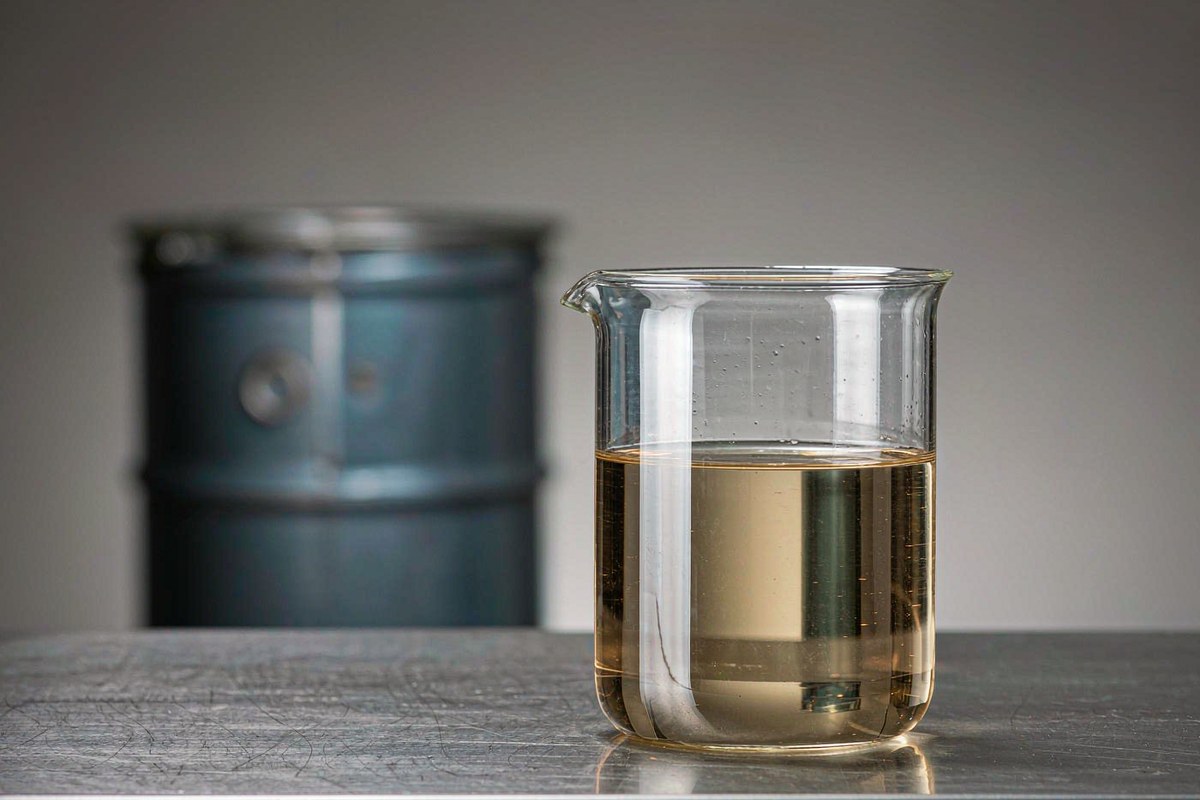
Figure 1. YLEP-631 pours warm and ships in steel drums; the color sits inside the Gardner limit of 3.
1. Introduction
Heat service above 150 °C is the usual reason a formulator leaves a bisphenol A liquid for a novolac epoxy; the same move narrows the process window.
YLEP-631 comes from a phenol-formaldehyde novolac glycidylated with epichlorohydrin; the oligomer mixture averages 2.7 epoxide rings per molecule against a fixed two for bisphenol A diglycidyl ether.
Diagnosis first. Dosage second.
2. Materials and Methods: Identity and Test Basis for Liquid Phenolic Epoxy Resin YLEP-631
The product page publishes five specification items and a functionality statement; Table 1 sets identity beside them.
2.1 Product Identification and Published Specification
Three gaps matter for procurement: no CAS number, density or flash point is published, so transport classification leans on the TDS and MSDS.
Table 1. Identity and published specification of YLEP-631.
Item
Information
CAS No.
Not published; confirm on the current TDS / MSDS / COA
Appearance
Colorless to yellowish liquid
Color, Gardner
3 maximum
EEW, g/eq
168-180
Viscosity
1100-1700 mPa·s at 52 °C
Hydrolyzable chlorine, ppm
500 maximum
Epoxy functionality
2.7 groups per molecule (as published)
Shelf life
At least 12 months from manufacture in the original drum
2.2 Test Methods and Data Sources
Values in Table 1 are reproduced as published, not re-measured; the lot COA overrides the catalogue window.
Epoxy equivalent weight is determined by titration; ASTM D1652 and ISO 3001 describe the two routes in common use.
Viscosity is quoted at 52 °C because the grade thickens sharply as it cools; a 25 °C reading is not comparable without a measured curve.
Color follows ASTM D1544; hydrolyzable chlorine is a single ceiling, which suits buyers screening lots for ionic contamination.
Incoming checks are usually performed in duplicate at two positions in the drum, with a third determination (n = 3) when the pair disagrees.
3. Results and Discussion: Where a 2.7-Functionality Resin Fails
Two numbers set the operating window for YLEP-631: 2.7 epoxy groups per molecule and a viscosity specified at 52 °C.
3.1 Structure and the Reactivity Penalty
Per kilogram, an EEW of 168-180 g/eq delivers 5.56-5.95 epoxy equivalents; a 184-190 g/eq bisphenol A liquid delivers 5.26-5.43. The gap is 5 to 10 percent.
The novolac earns its price elsewhere: 2.7 reactive ends per molecule build network nodes faster than a difunctional resin can, lifting heat deflection and hot wet strength.
The same 2.7 ends cause most field failures: more heat per unit mass during cure, less elongation, a shorter margin between workable viscosity and gel.
Functionality buys heat resistance with process time.
Moisture adds a second penalty: water picked up in a humid storeroom consumes epoxide and feeds the amine blush that spoils thin coatings; drums opened through a coastal summer gel early.
3.2 Field Failure Modes: Symptom, Root Cause, Countermeasure
Seven patterns cover most failures reported for systems built on this grade, and each maps to a published number in Table 1.
Table 2. Failure modes reported for liquid phenolic epoxy resin YLEP-631 systems.
Observed symptom
Likely root cause
Countermeasure
Viscosity creep or gel in a partly used drum
Repeated opening in humid air; moisture starts headspace reaction
Reseal at once, oldest stock first, re-check at 52 °C
Runaway exotherm or char in thick castings
2.7 epoxides per molecule release more heat per unit mass
Cast in layers, chill the mould, use a slower amine
Cracks or brittle fracture after demoulding
High crosslink density, low elongation
Blend 20-30 phr of a difunctional liquid, ramp the cure
Dry spots on fibre in laminates
Bath cooled below the 52 °C reference
Hold the bath at 55-60 °C and log it
Ionic leakage or copper corrosion
Chlorine ceiling is 500 ppm, not zero
Screen lot COA; extraction-test the laminate
Amine blush or oily film on coatings
Moisture condensing on a cold substrate
Keep substrate 3 °C above dew point, thin coats
Batch color drift in clear parts
Gardner 3 maximum allows a wide visual window
Agree an internal limit tighter than 3 per lot
Two are thermal, two are moisture or stoichiometry errors, the rest storage or specification gaps. Each costs more to fix than the resin.
3.3 Comparison with Alternative Systems
Table 3 places YLEP-631 beside four alternatives, using published values only.
Table 3. Property comparison of YLEP-631 with alternative epoxy systems (published values).
Property
YLEP-631
YLEP-638
YLE-128 (DGEBA)
YLE-170 (BPF)
YLSE-721
EEW, g/eq
168-180
170-190
184-190
160-180
110-125
Form at 25 °C
Liquid
Semi-solid
Liquid
Liquid
Liquid
Viscosity
1100-1700 mPa·s at 52 °C
Not published; softening point 36-40 °C
11000-15000 mPa·s at 25 °C
2000-5000 mPa·s at 25 °C
6000-11000 mPa·s at 25 °C
Epoxy groups per molecule
2.7
Above 2
2
2
4
YLE-128 bisphenol A epoxy resin stays the reference for room-temperature work: no heating, familiar dosage, two epoxides, a lower heat ceiling.
The semi-solid sibling YLEP-638 novolac grade differs in one number: a 36-40 °C softening point instead of a pourable viscosity.
YLE-170 bisphenol F resin runs at 2000-5000 mPa·s without warming and shares the 160-180 g/eq bracket but builds a less dense network.
YLSE-721 tetrafunctional resin, a glycidylamine at 110-125 g/eq, is the harder-edged route: four epoxides, higher viscosity even at 25 °C, a Gardner allowance of 10.
Color is a selection criterion, not a detail, for visible parts.
4. Formulation and Dosage Calculation
Stoichiometric hardener demand follows one line, phr being parts per hundred of resin by weight.
phr = 100 × AHEW ÷ EEW
Table 4 works the equation across the published EEW window.
Table 4. Stoichiometric hardener dosage for YLEP-631 across the published EEW window.
Hardener
Equivalent weight, g/eq
phr at EEW 168
phr at EEW 174
phr at EEW 180
DETA (CAS 111-40-0), theoretical AHEW
20.6
12.3
11.8
11.4
MACM (CAS 6864-37-5), published AHEW
60
35.7
34.5
33.3
YLH-9101 (modified amine), published AHEW
92
54.8
52.9
51.1
MHHPA (CAS 25550-51-0), anhydride at ratio 0.85
143.0
85.1
82.2
79.4
Worked example: 2 kg at 174 g/eq takes 100 × 92 ÷ 174 = 52.9 phr of YLH-9101 modified amine, or 1058 g weighed separately.
Blends move the target: seventy parts at 174 g/eq with thirty at 170 g/eq give a blend EEW of 172.8 g/eq, and a DETA demand of 11.9 phr.
Treat every figure as a starting point: delivered EEW drifts inside its window, and a 10 g error is tolerable in 2 kg but is five percent in a 200 g lab mix.
Post-cure belongs in the decision: heat resistance appears only after an elevated-temperature schedule; the current TDS governs the steps.
5. Processing Notes and Operating Window
Warming the drum is the first operation, and where most batches go wrong.
• Heat indirectly with a water bath or drum heater at 50-60 °C; open flame is out, per the product page.
• A 200 L drum needs hours on the heater before the bulk reaches temperature.
• Log viscosity at 52 °C against 1100-1700 mPa·s before charging the bath or the mixer.
• Weigh resin and hardener by mass, never by volume, and degas 10-15 minutes under vacuum for sections above about 25 mm.
• Ramp the cure: hold near 80 °C before climbing to 150-180 °C so the exotherm does not stack.
Figure 2. A heater jacket warms the drum for decanting; indirect heat keeps the wall below the reaction point.
6. Applications
Six routes appear on the product page, and each spends a different part of the specification.
Electronic laminates use the dense network and the 500 ppm chlorine ceiling, watching ionic extraction on fine-line boards. Heat-resistant adhesives take hot strength from the tighter mesh but fail as brittle joints under impact. High-temperature coatings gain chemical resistance after post-cure and lose finish to amine blush on cold substrates.
Composites wet out fibre at 1100-1700 mPa·s, but only while the bath holds 55-60 °C. Potting and casting risk exotherm cracking in thick sections; civil engineering grouts and epoxy vinyl inks take chemical resistance from the same network.
None runs neat at room temperature; each starts from a warmed bath, a heated substrate or a blend.
Figure 3. Wet lay-up shows the 52 °C viscosity first: fabric must be wet out while the bath holds temperature.
7. Limitations and Material Verification
7.1 Known Limitations and Unsuitable Cases
This is not the resin for room-temperature hand lay-up, for impact-critical parts, or for flame retardance without additives. The molecule carries neither phosphorus nor bromine; a halogen-free flame-retardant laminate needs a co-resin such as YLDP-320 phenolic flame-retardant resin at 3.0% phosphorus.
Viscosity exists only at 52 °C. If your process runs at 25 °C, ask for a measured curve instead of extrapolating.
Clear parts need a color agreement tighter than Gardner 3; two compliant lots can look visibly different side by side.
7.2 Incoming Inspection, Packaging, Storage and Safety
Incoming inspection should verify EEW by titration against the lot COA, plus color and hydrolyzable chlorine. Reject a lot outside 168-180 g/eq; every dosage moves with it.
Storage is standard: well-ventilated, away from flames and direct sunlight, cap closed after use, oldest stock first. Shelf life is at least 12 months in the original drum.
Safety information lives in the MSDS. Novolac epoxies are skin sensitisers; gloves and eye protection belong in the written procedure.
8. Frequently Asked Questions
Why does a liquid grade need warming before use?
YLEP-631 is liquid at 52 °C with 1100-1700 mPa·s, but the novolac backbone thickens sharply as temperature falls. Warming to 50-60 °C restores a workable viscosity.
How is the hardener ratio calculated for a 168-180 g/eq novolac?
phr = 100 × AHEW ÷ EEW. With MACM cycloaliphatic diamine at AHEW 60 g/eq, 100 g of resin at 174 g/eq takes 34.5 g of hardener. Use the lot COA value, not the catalogue midpoint.
What causes cracking in thick YLEP-631 castings?
Crosslink density: 2.7 epoxides per molecule build a rigid, low-elongation network, and a thick section adds thermal stress from its own exotherm. Cast in layers, ramp the cure, and consider 20-30 phr of a difunctional liquid.
Is 500 ppm hydrolyzable chlorine low enough for electronic laminates?
A ceiling, not a guarantee: a lot at 480 ppm passes specification yet may still run high for a fine-line board. Screen each lot COA and extraction-test the laminate when ionic cleanliness is critical.
Can YLEP-631 be blended with a bisphenol A resin?
Yes, and in practice it usually is. Blending cuts viscosity and cost while the novolac fraction keeps the heat resistance. Recalculate the blend EEW from 100 ÷ (sum of parts ÷ EEW of each) before fixing the hardener weight.
Does YLEP-631 provide flame retardance?
No. The molecule contains neither bromine nor phosphorus; flame retardance must come from a hardener, a co-resin or an additive, with any RoHS or UL 94 claim verified against current certificates.
9. Conclusions
Liquid phenolic epoxy resin YLEP-631 is specified at 168-180 g/eq, 1100-1700 mPa·s at 52 °C, Gardner 3 maximum and 500 ppm hydrolyzable chlorine, with 2.7 epoxy groups per molecule.
Its failure history is a history of that functionality: exotherm and brittleness in cure, viscosity and moisture in storage, ionic chlorine in electronics.
Used warm, dosed from the lot COA and post-cured on schedule, the grade delivers the heat resistance it is priced for.
10. References
1. Product page, PNE type phenolic epoxy resin YLEP-631, Yolatech: https://www.yolatech.com/pne-type-phenolic-epoxy-resin-ylep-631 (accessed 2026-10-20).
2. Product page, PNE type phenolic epoxy resin YLEP-638, Yolatech: https://www.yolatech.com/pne-type-phenolic-epoxy-resin-ylep-638 (accessed 2026-10-20).
3. Product pages, bisphenol A epoxy resin YLE-127/YLE-128 and bisphenol F epoxy resin YLE-170, Yolatech: https://www.yolatech.com/bisphenol-a-epoxy-resin / https://www.yolatech.com/bisphenol-f-epoxy-resin
4. Technical Data Sheet, Material Safety Data Sheet and Certificate of Analysis for YLEP-631, Yolatech (available on request).
5. ASTM D1652 (epoxy content, EEW) with ISO 3001 (epoxy equivalent), together with ASTM D1544 (Gardner color), ASTM D445 (kinematic viscosity) and ASTM E203 (Karl Fischer water).
إقرأ المزيد






 شبكة IPv6 المدعومة