


اللغة
:

اللغة
:
Styrenated phenol applications in epoxy all reduce to one reactive site: a phenolic hydroxyl that opens the epoxide ring. MSP-250 is a pale phenolic liquid, OH value 230-260 mg KOH/g, viscosity 300-800 mPa·s at 25 °C, dosed at 1.0-3.0 phr. Five systems take it for different reasons, all with limits.
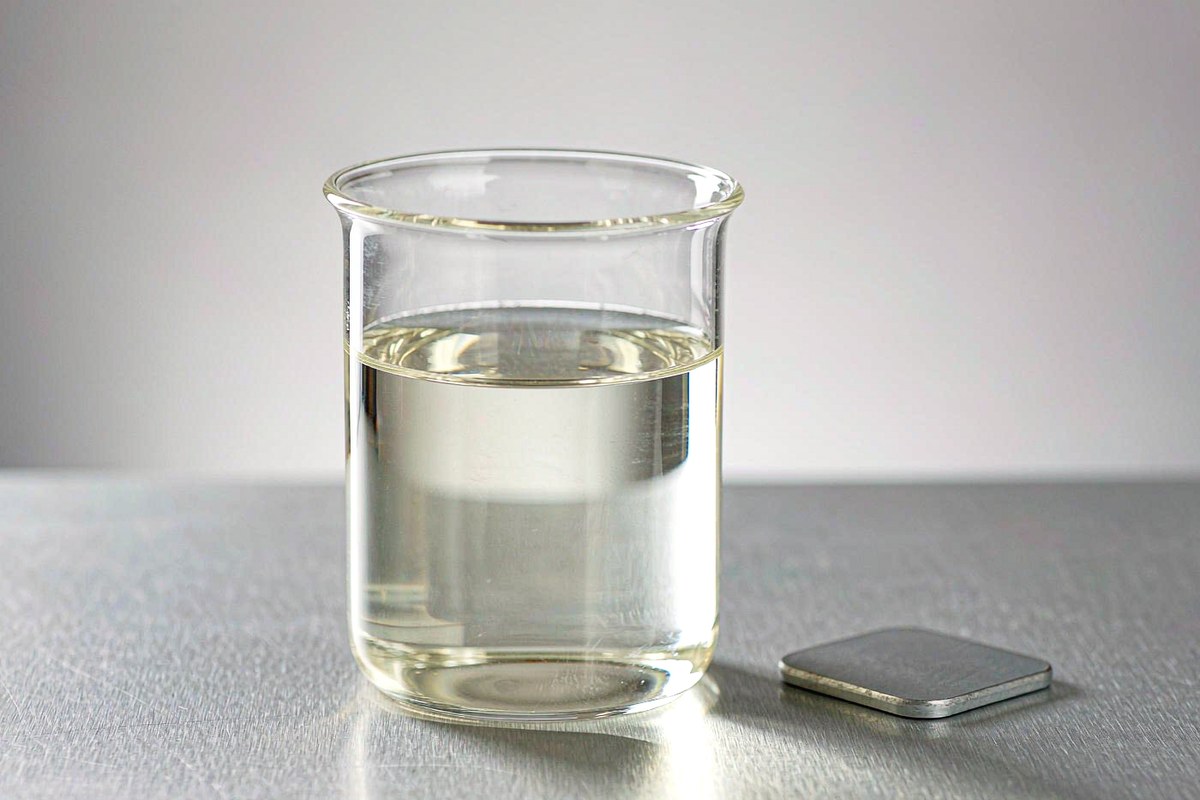
Figure 1. Styrenated phenol MSP-250 as supplied: a pale liquid that pours at room temperature, shown next to a cured coating film.
A buyer rarely wants styrenated phenol for one reason. A marine paint wants wetting and cure speed. A potting compound wants a viscosity cut that adds no chloride. A hardener blend wants nonylphenol off the label.
Those uses rest on one hydroxyl, so a single drum serves five conversations. What changes is the dose window and the way an overdose shows up. This report maps five systems onto published data and works the stoichiometry behind each window.
MSP-250 is a single grade with one hydroxyl band and no solvent. The styrenated phenol MSP-250 page carries Table 1, and the hydroxyl value is the only line a formulator has to convert into an equivalent weight. Grade background and drum handling appear in the epoxy resin modifier overview, a general introduction to the grade.
Table 1. Published specification of styrenated phenol MSP-250.
Item |
Published value |
Chemical name |
Styrenated phenol, mono-hepta-styrenated phenol |
CAS No. |
462-94-2; 61788-44-1 also appears in the page tag block |
Appearance |
Colorless to light yellow liquid |
OH value, mg KOH/g |
230-260 |
Viscosity, mPa·s at 25 °C |
300-800 |
Water, % |
0.50 max |
Purity line, % |
2 max, listed as an upper limit |
Typical dose, phr |
1.0-3.0 |
Packaging, kg |
25 / 200 / 1000 |
Shelf life, months |
12, sealed, ambient |
Two lines need verifying before a purchase order. The purity entry reads as a maximum, which is unusual, and is probably a volatile limit. The two CAS numbers point at different registrations of the same chemistry.
Hydroxyl value is titrated by acetylation and reported as mg KOH/g; 56100 divided by that figure gives 216-244 g/eq across the band. Water is run according to ASTM E203, colour by ASTM D1544, viscosity on a rotational spindle measured at 25 °C in duplicate. Grade data comes from the page and its TDS; application notes come from workshop practice and are not offered as test evidence.
Phenol does two jobs at once. It donates a proton and speeds the amine-epoxy opening, so gel time drops as soon as it is added. It also reacts with an epoxide itself, and each molecule carries one hydroxyl, so that chain ends there.
Acceleration is worth money on a cold floor. The chain stopping costs crosslink density, and the bill arrives later as a softer film or a lower glass transition. In practice, dose decides which effect wins.
At 245 mg KOH/g the equivalent weight is 229 g/eq. Table 2 converts that into what one, two and three parts consume on EEW 185 resin.
Table 2. Epoxide consumed by MSP-250 across the published dose band, on EEW 185 resin.
Dose, phr |
Phenol eq per 100 g |
Epoxide capped, % |
Viscosity estimate, mPa·s |
1.0 |
0.0044 |
0.81 |
11,700 |
2.0 |
0.0087 |
1.62 |
11,300 |
3.0 |
0.0131 |
2.42 |
10,900 |
The viscosity column is an estimate from the logarithmic mixing rule, using 12,000 mPa·s for a standard liquid DGEBA and 550 for MSP-250. Three parts remove about 9%. That is not what a diluent does, and it is the first thing buyers get wrong.
Nonylphenol remains the benchmark because it is cheap and it works; the case for replacing it rests on regulation, not on performance. A glycidyl ether diluent solves viscosity properly but brings its own chlorine.
Table 3. Styrenated phenol MSP-250 against the two materials it most often replaces.
Item |
MSP-250 |
Alternative |
Function |
Accelerator, wetting phenol |
Nonylphenol: same role |
Reactive groups |
One hydroxyl per molecule |
One hydroxyl per molecule |
Viscosity at 25 °C |
300-800 mPa·s |
Nonylphenol: several hundred mPa·s |
Viscosity cut in resin |
About 9% at 3 phr |
BGE diluent: 40-50% at 10 phr |
Chlorine contribution |
None specified |
BGE: 6,000-9,000 ppm typical |
Regulatory status |
Sold as a nonylphenol alternative |
Nonylphenol: restricted in the EU |
If the goal is a thinner, MSP-250 is the wrong purchase. If the goal is cure speed and wetting without a nonylphenol label, it is the right one. Those briefs usually get mixed up in the same enquiry.
One formula covers the band: the fraction of epoxide groups capped equals phr times hydroxyl value times EEW, divided by 5,610,000. The constant is 56100 mg KOH per equivalent over 100 g of resin.
Worked case: EEW 185, OH value 245, 2 phr gives 1.6%. The amine hardener comes down by the same 1.6% to hold stoichiometry, so 50 phr becomes 49.2.
Table 4. Amine correction for a 3 phr addition across three common EEW values.
EEW, g/eq |
Epoxy eq per 100 g |
Epoxide capped, % |
Hardener cut, % |
170 |
0.588 |
2.23 |
2.2 |
185 |
0.541 |
2.42 |
2.4 |
190 |
0.526 |
2.49 |
2.5 |
Treat that as an upper bound. Not every hydroxyl has reacted by gel time, and applying the number as a hard rule on a fast system leaves the film tacky longer than it should.
MSP-250 goes into the resin side, never the hardener drum, and before any filler. Four points decide whether the batch behaves.
• Warm the drum to 30-40 °C before pumping. At 15 °C the liquid sits at the top of its band and a 25 kg pail drains slowly.
• Add at 40-60 °C with moderate shear for 10-15 min; a cold addition leaves a striated batch that looks mixed and is not.
• Close the drum the same shift. Water is specified at 0.50% max by ASTM E203, and wet phenol foams under vacuum.
• Re-time the gel on every hardener lot. Two parts can halve the pot life of a fast modified amine.
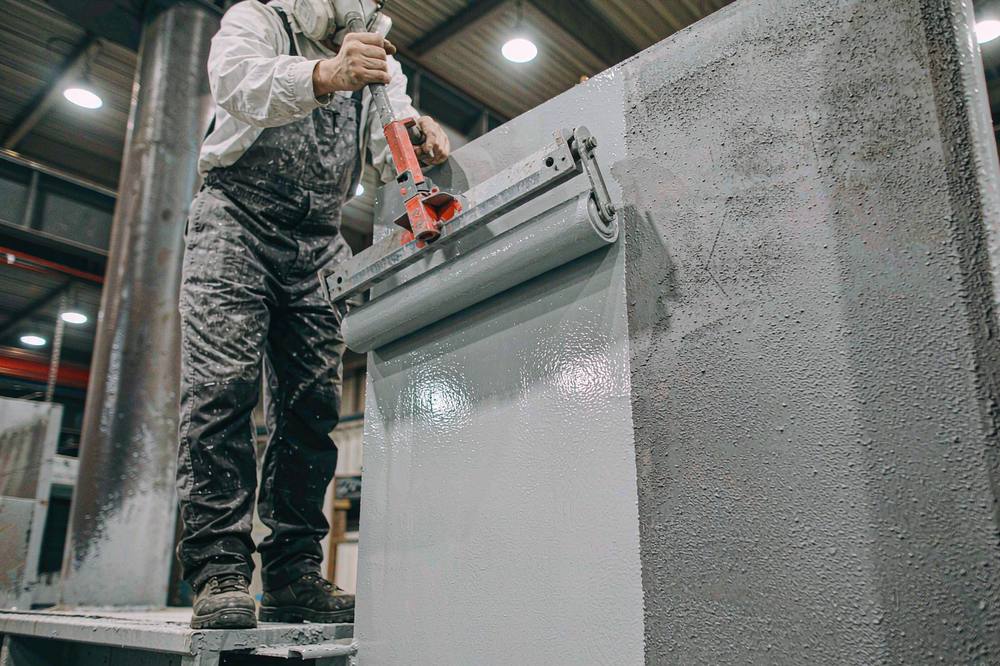
Figure 2. Maintenance coating applied over blasted steel; wetting and cure speed are the two properties MSP-250 is bought for here.
The five systems share a chemistry and little else. Each entry gives the function, the dose normally quoted, and the point where the same property turns into a defect.
The largest outlet, and the least forgiving. A phenol pulls resin into the anchor profile of blasted steel, and the drop in surface tension is what stops pinholes at 150 µm dry film.
Dose sits at 1.5-2.5 phr. Above 3 phr the film usually stays softer and will not sand cleanly. Test yellowing before committing a white topcoat.
In an adhesive the phenol earns its place at the interface. Steel arrives with mill scale, cutting oil or light oxide, and a wetting phenol helps the adhesive displace that layer instead of bonding to it.
Two parts is a common start. An adhesive failure points to wetting; a cohesive failure means there is enough, and more only shortens the open time.
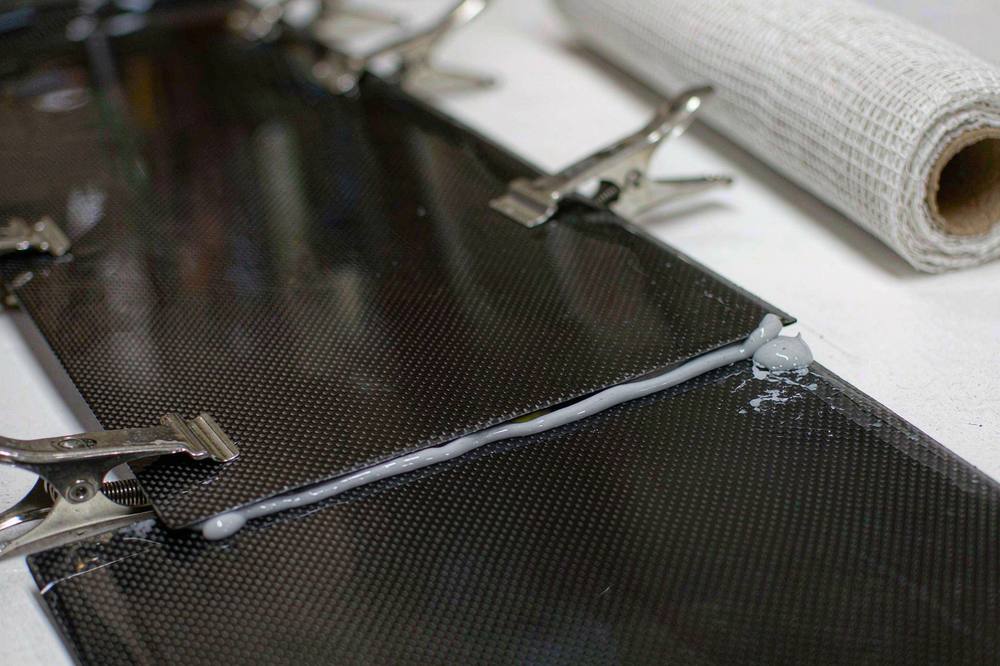
Figure 3. Composite-to-composite bonding with an epoxy adhesive; surface wetting decides whether the joint fails at the interface or inside the adhesive.
Potting is bought on chloride content and ionic cleanliness, and the phenol adds neither. Most of these systems are built on liquid bisphenol A epoxy resin cured with a polyetheramine such as D-230.
The ceiling is set by glass transition, not viscosity. At 1-2 phr faster conversion can lift Tg slightly; past 3 phr chain stopping wins and Tg falls.
In a solvent-borne varnish for laminate, MSP-250 acts as flow modifier and cure promoter at 1-2 phr on solids. It wets glass cloth and leaves no chloride in the press.
Verify dielectric numbers on your own panel. A phenolic additive changes conversion, and Dk and Df follow conversion.
Hardener producers buy it as a component. Blended into a modified amine hardener at 5-15% it lowers viscosity, improves compatibility and takes nonylphenol off the label.
Outside epoxy it is an ethoxylation starter for non-ionic surfactants, priced on hydroxyl value and colour rather than cure speed.
Table 5. Styrenated phenol applications, dose windows and the point where each one fails.
Application |
Dose, phr |
Function |
Where it fails |
Marine and maintenance coatings |
1.5-2.5 |
Wetting, cure speed |
Soft film that will not sand |
Adhesives and primers |
1.0-2.0 |
Substrate wetting |
Open time collapses |
Electrical potting |
1.0-2.0 |
Chloride-free viscosity cut |
Tg drops above 3 phr |
Laminate and composites |
1.0-2.0 |
Flow, glass wetting |
Dielectric numbers assumed |
Hardener blends |
5-15% of blend |
Nonylphenol replacement |
Matched by mass, under-dosed |
One pattern runs through all five rows. The material is bought for a surface or cure effect, and rejected when the same hydroxyl acts as a chain terminator.
MSP-250 is monofunctional and stays that way. It cannot raise crosslink density, so an application that needs a high Tg from the additive alone is the wrong application.
No halogen-free, RoHS or food-contact claim should be inferred from the page. Those statuses depend on documents the buyer requests, and the two CAS numbers are a reason to confirm which registration your customs paperwork carries.
Check hydroxyl value, water and colour on every COA. A lot at 230 mg KOH/g needs about 6% more material than one at 260 for the same phenol equivalents.
Material ships in 25, 200 and 1000 kg drums with a 12-month shelf life. Store away from flame and sunlight, keep the cap closed, and follow the MSDS for spills.
No. A reactive diluent carries an epoxide and cuts viscosity by 40-50% at 10 phr. MSP-250 carries a hydroxyl and cuts about 9% at 3 phr.
Match on hydroxyl equivalents, not mass. A mass-for-mass swap under-doses when the replacement has the lower hydroxyl value.
Start at 1.5 phr, with 1.0 and 2.5 beside it. Measure gel time, hardness at 24 h and Tg; most systems settle in the lower half of the band.
Yes, as an accelerator. Phenols open anhydride rings and shorten the cure at the same temperature; the chain-stopping limit still applies.
The intro line gives 462-94-2 and the tag block gives 61788-44-1, the polymeric registration name. Confirm with the supplier before the first shipment.
Test it. Phenolic residues are not colour neutral at high dose, and a white topcoat shows what a grey primer hides. Two phr is a safer ceiling than three.
Styrenated phenol MSP-250 is one molecule with one hydroxyl, sold into five applications that want five different things. Coatings and adhesives buy wetting and cure speed. Potting buys a viscosity cut with no chloride. Laminate buys flow.
The arithmetic that separates them is small: 1-3 phr caps 0.8-2.4% of the epoxide groups on EEW 185 resin, and the hardener follows that number down. Buy it as an accelerator, and the dose band holds.
1. Yolatech. Styrenated phenol MSP-250 product page. https://www.yolatech.com/styrenated-phenol-msp-250
2. Yolatech. Technical data sheet and certificate of analysis for styrenated phenol MSP-250, current lot.
3. ASTM D1652, standard test method for epoxy content of epoxy resins.
4. ASTM E203, standard test method for water using volumetric Karl Fischer titration.
5. ASTM D1544, standard test method for colour of transparent liquids, Gardner colour scale.
6. ASTM D93, standard test methods for flash point by Pensky-Martens closed cup tester.
7. ISO 3001, plastics, epoxy compounds, determination of epoxide equivalent.

 شبكة IPv6 المدعومة